
 Email: sales@slxytech.com
 WhatsApp / Wechat:8617062388866
 Phone:+86 17062388866
Description
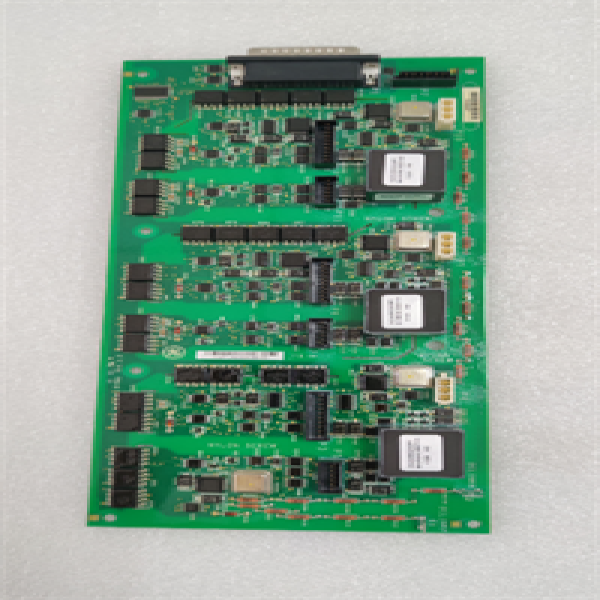
The IS210AEBIH3BED is a high-performance Analog Electronic Board Interface developed by GE Vernova for the Mark VI turbine control system platform. This advanced module represents the latest evolution in GE’s analog signal processing technology, designed to provide robust and precise interface capabilities between the turbine controller and field devices in demanding power generation environments. The IS210AEBIH3BED serves as a critical component in the signal chain, handling both analog input signals from monitoring instruments and analog output signals to control elements with exceptional accuracy and reliability. This dual functionality enables comprehensive turbine management by facilitating precise measurement of process variables while simultaneously executing control commands to actuators and positioning devices throughout the turbine system.
As part of GE’s commitment to technological advancement in turbine control systems, the IS210AEBIH3BED incorporates enhanced features and improvements over previous versions, including better noise immunity, higher sampling rates, and advanced diagnostic capabilities. The module is engineered to operate flawlessly in the challenging conditions of power generation facilities, where electrical noise, temperature variations, and vibration are constant factors. The IS210AEBIH3BED provides essential signal conditioning, isolation, and conversion functions that ensure the integrity of analog signals transmitted between field devices and the main turbine controller. In the complex architecture of the Mark VI system, this module plays a vital role in maintaining operational efficiency, equipment protection, and safety by delivering accurate, reliable data for control decisions and precise output signals for actuator positioning.
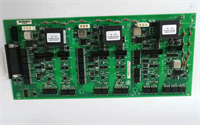
IS210AEBIH3BED GE
Technical Specifications
| Parameter Name | Parameter Value |
| Product Model | IS210AEBIH3BED |
| Manufacturer | GE Vernova |
| Product Type | Analog Electronic Board Interface |
| Series | Mark VI Turbine Control System |
| Compatible Controller | Mark VI and Mark VIe Systems |
| I/O Type | Analog Input/Output Module |
| Signal Range | Voltage: 0-10V DC, ±10V DC; Current: 4-20mA, 0-20mA |
| Channel Configuration | 16-channel high-density design |
| Resolution | 16-bit analog-to-digital and digital-to-analog conversion |
| Accuracy | ±0.1% of full scale at 25°C |
| Power Requirements | +5V DC and ±15V DC via VME backplane |
| Isolation Rating | 1500V RMS channel-to-channel isolation |
| Communication Protocol | VME bus architecture with 32-bit data transfer |
| Operating Temperature | -40°C to +70°C (-40°F to +158°F) |
| Sampling Rate | Programmable up to 1000 samples/second per channel |
| Connection Interface | Front-access removable terminal blocks |
Main Features and Advantages
The IS210AEBIH3BED delivers superior performance through its advanced signal processing architecture and high channel density design. The module’s 16 independent channels can be individually configured for various signal types through software settings in the Mark VI engineering tools, providing exceptional flexibility for diverse application requirements. Each channel features precision signal conditioning circuitry with programmable gain and filtering options, ensuring optimal signal quality for both high-level voltage signals and low-level current inputs. The IS210AEBIH3BED incorporates high-resolution 16-bit converters that maintain measurement accuracy across the entire operating temperature range, providing the precision necessary for critical control loops where small signal variations can significantly impact turbine performance and efficiency.
Enhanced system integration and diagnostic capabilities: The IS210AEBIH3BED features comprehensive built-in diagnostics that continuously monitor module health, signal integrity, and communication status. These advanced diagnostics can detect conditions such as open circuits, short circuits, signal drift, and communication errors, providing early warning of potential issues before they affect turbine operation. The module’s robust electrical isolation protects the control system from field-side transients and ground potential differences, ensuring reliable operation in electrically noisy environments. The IS210AEBIH3BED is designed for seamless integration with the Mark VI system architecture, supporting automatic configuration and hot-swap replacement in compatible configurations to minimize downtime during maintenance operations. The module’s firmware includes features for real-time status reporting and historical data logging, enhancing operational visibility and simplifying troubleshooting activities.
Application Field
The IS210AEBIH3BED finds extensive application in modern gas and steam turbine control systems where high-performance analog signal processing is required. In advanced gas turbine applications, the module interfaces with critical sensors measuring compressor inlet temperature, fuel gas pressure, exhaust thermocouples, and actuator position feedback signals. These measurements enable the turbine control system to maintain optimal combustion conditions, maximize efficiency, and ensure compliance with stringent emissions regulations. The IS210AEBIH3BED also provides precise control outputs to electro-hydraulic actuators that position inlet guide vanes, fuel control valves, and bleed valves, ensuring precise response to control system commands. The module’s high channel count makes it particularly valuable in complex combined-cycle power plants where multiple systems require extensive analog monitoring and control capabilities.
In steam turbine control applications, the IS210AEBIH3BED monitors critical parameters including steam pressure, bearing oil temperature, and valve position feedback while providing control signals to hydraulic actuators that govern steam admission valves. The module’s precision and reliability make it suitable for implementation in safety-critical control loops where accurate measurement and responsive control action are essential for equipment protection. Beyond traditional power generation, the IS210AEBIH3BED is deployed in industrial drive applications for compressors, pumps, and other rotating equipment where reliable analog signal processing is required for precise speed and load control. The versatility and robustness of the IS210AEBIH3BED make it a preferred choice for engineers designing control systems that demand high reliability, precision, and diagnostic capabilities in challenging industrial environments.
Related Products
IS210AEBIH3BEC: Similar analog electronic board interface with potential firmware or minor specification differences.
IS210AEBIH2BEB: Previous generation module with comparable functionality but potentially different performance characteristics.
IS215ACLEH2A: Analog control module offering complementary functionality for expanded system requirements.
IS210DAMAH1A: Digital input module that works in conjunction with the IS210AEBIH3BED in comprehensive control applications.
IS215UCVGH1A: VME processor module that communicates with and coordinates the IS210AEBIH3BED operations.
IS210AEPBH1A: Analog input termination panel used for field wiring connection management with the IS210AEBIH3BED.
IS210AEDBH1A: Specialized analog output module providing additional control output capacity when needed.
IS210AEIAH2A: Analog input module offering alternative configuration options for specific application needs.
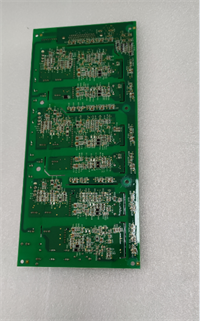
IS210AEBIH3BED GE
Installation and Maintenance
Pre-installation preparation: Before installing the IS210AEBIH3BED, ensure complete power isolation to the Mark VI control rack following established safety procedures including proper lockout/tagout protocols. Verify compatibility with the existing system configuration, including rack type, slot position, and firmware revision requirements. Carefully inspect the module’s edge connector and the corresponding backplane slot for any signs of damage, contamination, or bent pins. Have the appropriate Mark VI engineering software (ToolboxST) ready to configure the IS210AEBIH3BED parameters after physical installation, including signal type selection for each channel, scaling parameters, filter settings, and alarm setpoints based on the specific application requirements.
Maintenance recommendations: Implement a comprehensive maintenance strategy for the IS210AEBIH3BED that includes regular monitoring of module diagnostics through the Mark VI operator interface. Schedule periodic verification of critical analog loops during planned turbine outages to ensure measurement accuracy has not drifted over time. During maintenance windows, perform visual inspections of the module and its terminal connections, checking for signs of overheating, corrosion, or loose wiring. Maintain proper environmental conditions in the control cabinet, particularly controlling temperature and humidity to specifications that maximize the service life of the IS210AEBIH3BED. Always follow proper electrostatic discharge (ESD) precautions when handling the module, and maintain a certified spare unit to minimize system downtime during replacement operations. Document all maintenance activities and calibration verifications for regulatory compliance and historical tracking.