
 Email: sales@slxytech.com
 WhatsApp / Wechat:8617062388866
 Phone:+86 17062388866
Description
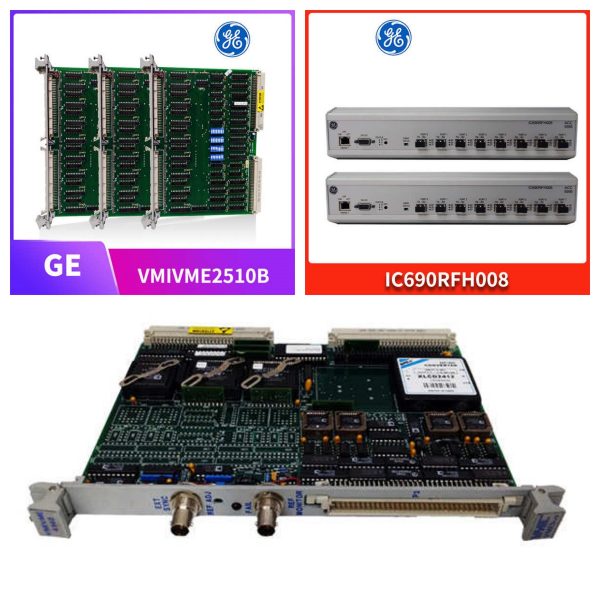
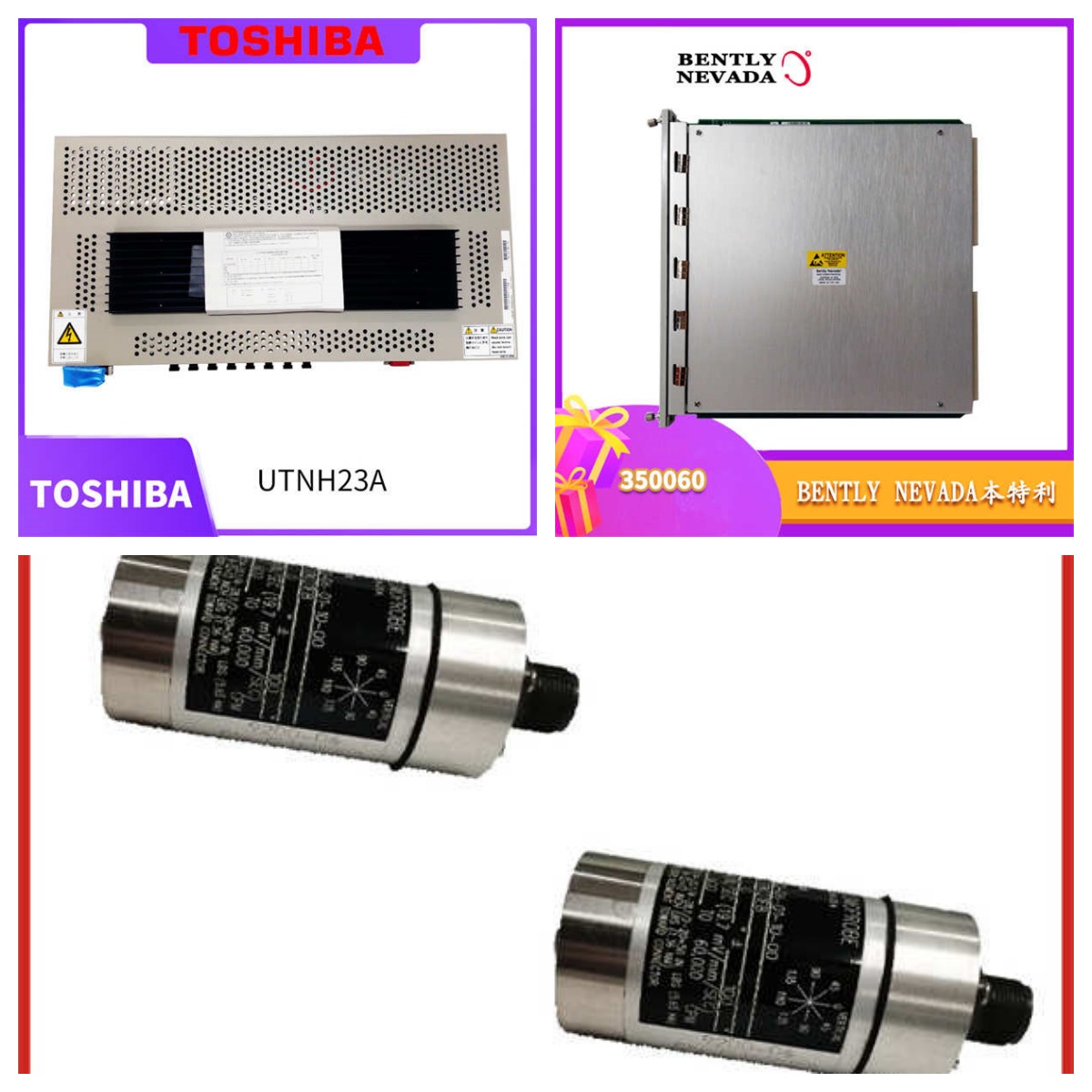
The ALSTOM PIB201A is a digital input/output (I/O) interface board designed for use within the ALSTOM (now part of GE Grid Solutions) MICROREC® family of numerical protection and control relays, particularly the MICROREC 600 and 800 series platforms. Serving as a critical field-side communication bridge, the ALSTOM PIB201A provides isolated digital inputs for monitoring breaker status, isolator positions, and external alarms, as well as digital outputs for tripping commands, relay activation, and local indication. This module enhances the base functionality of MICROREC units by expanding their connectivity to auxiliary devices in high-voltage substations, power plants, and industrial energy systems.
Engineered for reliability in electrically harsh environments, the ALSTOM PIB201A incorporates robust optical isolation, surge suppression, and conformal coating to withstand transient overvoltages, electromagnetic interference (EMI), and humidity—common challenges in utility-grade installations. The ALSTOM PIB201A communicates seamlessly with the main processor board via an internal backplane bus, ensuring deterministic response times for critical protection functions. As part of a legacy yet widely deployed protection architecture, the ALSTOM PIB201A remains essential for maintaining operational continuity in aging infrastructure while supporting modernization efforts through its proven interoperability and long-term availability.
 Technical Specifications
| Parameter Name | Parameter Value |
|---|---|
| Product Model | PIB201A |
| Manufacturer | ALSTOM Power Systems / GE Grid Solutions (legacy product line) |
| Product Type | Digital I/O Interface Board (Process Interface Board) |
| Compatible Platforms | MICROREC 600, MICROREC 800 Protection Relays |
| Number of Channels | Typically 8–16 configurable digital inputs and/or outputs |
| Input Type | Dry contact or wet contact (24–250 VDC/VAC, user-configurable) |
| Output Type | Relay contact or transistor output (depending on variant) |
| Isolation | Optical + galvanic isolation, ≥2.5 kV |
| Operating Temperature | -25°C to +70°C |
| EMC Compliance | IEC 61000-4-2/3/4/5 (Level 4 immunity) |
| Mounting | Internal plug-in board within MICROREC chassis |
| Power Supply | Powered via internal backplane from main relay unit |
Main Features and Advantages
High Immunity for Substation Environments: The PIB201A is built to endure the intense electromagnetic fields generated by switching operations, lightning strikes, and fault currents in high-voltage yards. Its multi-layered EMC protection—including TVS diodes, RC filters, and optocouplers—ensures signal integrity even during severe transients, preventing false tripping or missed events.
Flexible Channel Configuration: Depending on system requirements, the PIB201A can be configured for all inputs, all outputs, or a mixed arrangement. Digital inputs accept both dry contacts (e.g., from auxiliary switches) and wet signals (e.g., 110 VDC from other relays), while outputs can drive trip coils, alarm lamps, or SCADA RTUs. This adaptability reduces the need for external interface relays, simplifying panel design.
Seamless Integration with MICROREC Architecture: The PIB201A requires no external configuration software—it is auto-detected by the MICROREC main CPU upon power-up. All I/O points are mapped directly into the protection logic scheme, enabling engineers to use them in custom control sequences, interlocks, or event recording without additional programming overhead.
Long-Term Support for Legacy Systems: Although ALSTOM’s grid business was acquired by GE, the PIB201A remains in demand due to the global installed base of MICROREC systems still in service. Its mechanical and electrical compatibility ensures it can replace older PIB variants without chassis modification, making it a strategic spare for utilities managing end-of-life equipment.
Ruggedized Construction for Industrial Reliability: The PIB201A features a conformal-coated PCB and gold-plated edge connectors to resist corrosion from sulfur, salt, or dust—critical for coastal or industrial sites. Its solid-state design minimizes moving parts, contributing to a mean time between failures (MTBF) exceeding 100,000 hours.
Application Field
The PIB201A is primarily used in electrical transmission and distribution networks where reliable protection and control are essential. In 110 kV–500 kV substations, the PIB201A interfaces with circuit breaker auxiliary contacts to provide breaker position feedback to the MICROREC relay, enabling auto-reclosing logic or breaker failure detection. It also sends trip commands to the breaker’s trip coil during fault conditions detected by overcurrent, distance, or differential protection functions.
In thermal and hydroelectric power plants, the PIB201A monitors turbine valve status, generator cooling system alarms, and transformer Buchholz relay signals, feeding this data into the plant’s protection scheme. In renewable energy applications—such as solar farms or wind parks—the PIB201A integrates with collector substation relays to manage feeder faults and islanding detection. Additionally, in industrial microgrids and mining power systems, the PIB201A supports motor protection schemes by receiving start/stop signals and sending lockout commands. Its role as a dependable I/O extender ensures that even decades-old MICROREC installations continue to meet modern grid reliability standards.
 Related Products
PIB202A: Enhanced version with higher channel count or analog I/O capability
MICROREC 830: Main protection relay unit that hosts PIB201A boards
MIB201: Analog input interface board for voltage/current measurements in MICROREC systems
CIB201: Communication interface board providing RS485 or fiber-optic links
PIB101: Earlier-generation I/O board with fewer channels, predecessor to PIB201A
GEC ALSTHOM PIB201: Alternate labeling used in early production batches
GE UR Series I/O Modules: Modern equivalents in GE’s Universal Relay platform (not directly compatible but functionally similar)
Installation and Maintenance
Pre-installation preparation: Before inserting the PIB201A, ensure the MICROREC chassis is de-energized and follow lockout/tagout procedures. Verify that the slot guide matches the board’s keying to prevent misalignment. Inspect edge connectors for oxidation or damage, and clean if necessary using contact-safe solvent. Confirm wiring diagrams match the intended I/O assignment—digital inputs should not be connected to high-energy circuits without proper isolation.
Maintenance recommendations: The PIB201A contains no user-serviceable components, but periodic visual inspection for burnt traces, swollen capacitors, or loose terminal screws is recommended. Use the MICROREC front-panel display or PC-based configuration tool to verify I/O status and check for “input stuck” or “output fault” diagnostics. If replacement is needed, handle the PIB201A with ESD precautions and record the old unit’s serial number for traceability. Store spares in anti-static bags at room temperature, and validate functionality on a test bench before deployment in live systems.