
 Email: sales@slxytech.com
 WhatsApp / Wechat:8617062388866
 Phone:+86 17062388866
Description
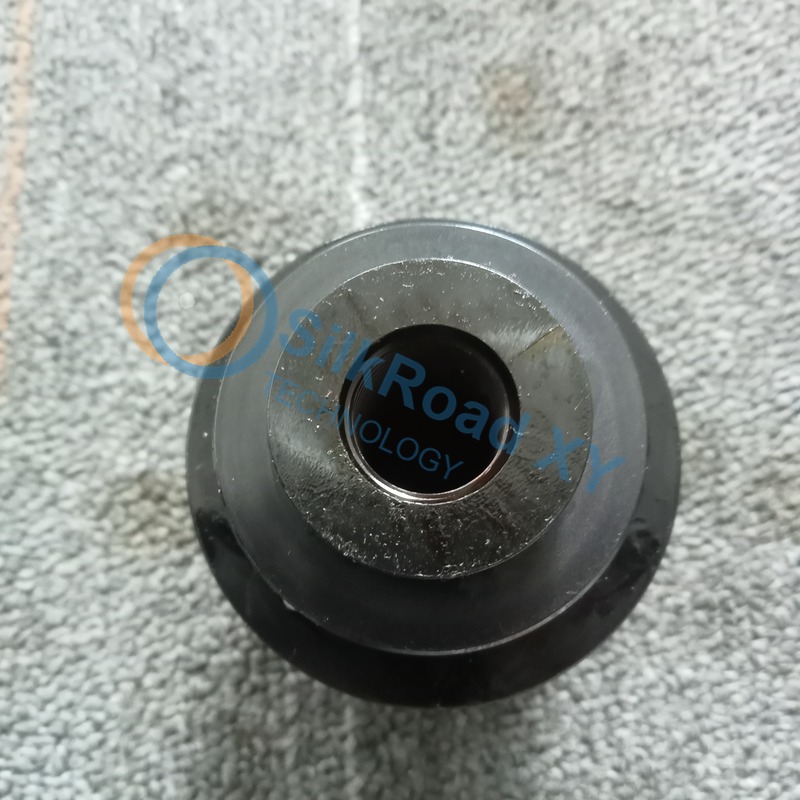
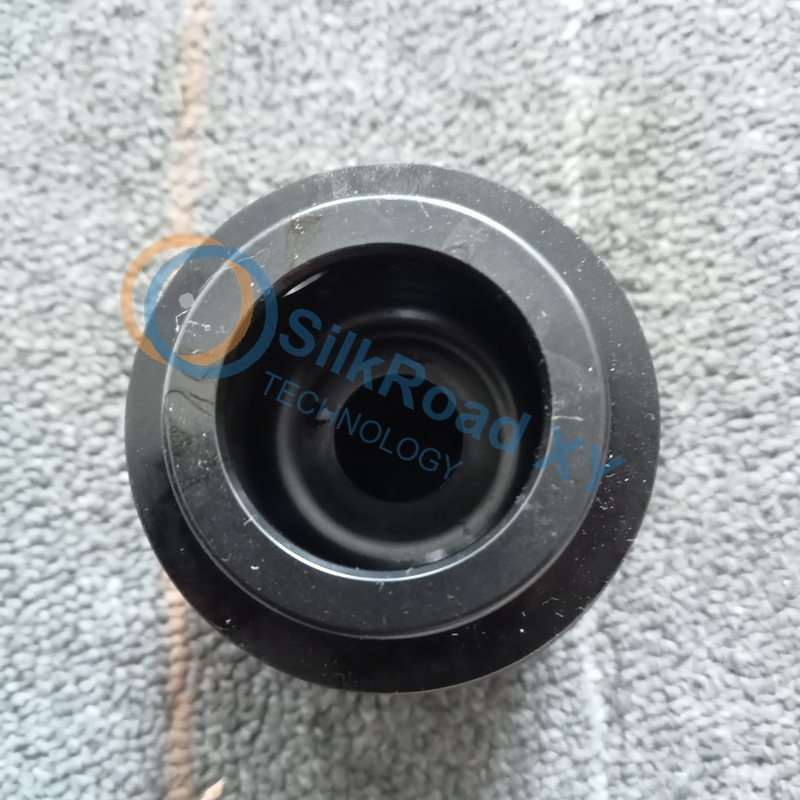
The Applied Materials (AMAT) part number 0041-31335 is a high-purity quartz chamber liner (also referred to as a quartz shield or process tube) used in several of Applied Materials’ legacy and current-generation semiconductor fabrication tools, including the Centura, Endura, Producer, and P5000 platforms. This critical consumable component lines the interior of plasma etch or chemical vapor deposition (CVD) chambers, acting as a sacrificial barrier that protects metallic chamber walls from corrosive process chemistries—such as fluorine-, chlorine-, or oxygen-based plasmas—while maintaining electrical isolation and thermal uniformity.
Manufactured from electronic-grade fused silica, the AMAT 0041-31335 exhibits exceptional resistance to thermal shock, low thermal expansion, and minimal outgassing—properties essential for sustaining nanometer-scale process control in advanced logic and memory manufacturing. Over time, the liner accumulates polymer deposits, metal sputter, and etch byproducts; when degraded, it can cause particle shedding, arcing, or drift in critical dimensions (CD). Regular replacement of the 0041-31335 is therefore a standard preventive maintenance (PM) procedure to ensure high yield, tool uptime, and process repeatability across thousands of wafer cycles.
Although classified as a “consumable,” the 0041-31335 is engineered to exacting tolerances—often within ±0.1 mm—to match chamber gas flow dynamics and RF field distribution. Its geometry is optimized for specific tool configurations (e.g., single-wafer vs. batch), making cross-platform compatibility limited without validation. As semiconductor fabs extend the life of mature 200mm lines while ramping 300mm capacity, demand for genuine or certified-equivalent AMAT 0041-31335 parts remains strong worldwide.
 Technical Specifications
| Parameter | Value |
|---|---|
| Manufacturer | Applied Materials, Inc. (AMAT) |
| Part Number | 0041-31335 |
| Description | Quartz Chamber Liner / Process Shield |
| Material | High-purity fused silica (SiO₂ ≥ 99.99%) |
| Purity Level | Electronic grade (metal impurities < 1> |
| Operating Temperature | Up to 1,100°C (short-term peaks) |
| Thermal Shock Resistance | Excellent (ΔT > 1,000°C) |
| Typical Tool Compatibility | Centura DPS II, Endura PVD, Producer HDP-CVD, P5000 Metal Etch |
| Wafer Size Support | 200 mm and 300 mm platforms |
| Surface Finish | Polished interior to reduce particle adhesion |
| Certifications | Compliant with SEMI F57, ISO 14644-1 (Class 1 cleanroom handling) |
| Packaging | Double-bagged in nitrogen-purged, static-dissipative container |
Main Features and Advantages
Ultra-low contamination for high-yield processing:
The AMAT 0041-31335 is fabricated in ISO Class 4 (or better) cleanrooms using synthetic fused silica with trace metal content below 1 ppm—critical for preventing killer defects in sub-90nm nodes.
Thermal and plasma stability:
Unlike ceramic or alumina alternatives, quartz maintains dimensional integrity during rapid thermal cycling and resists erosion from aggressive plasmas (e.g., CF₄/O₂, Cl₂/BCl₃), extending PM intervals.
RF transparency and arc prevention:
As an excellent electrical insulator, the quartz liner prevents parasitic RF coupling to chamber walls, reducing the risk of micro-arcing that can damage wafers or sensors.
Precise fit for process repeatability:
Machined to OEM specifications, the 0041-31335 ensures consistent gas residence time and plasma density—key for etch rate uniformity across the wafer.
Cost-effective lifecycle management:
While not reusable indefinitely, the 0041-31335 offers predictable wear characteristics, enabling fabs to schedule replacements during planned downtimes and avoid unscheduled tool stops.
Application Field
The AMAT 0041-31335 is predominantly used in semiconductor front-end-of-line (FEOL) and back-end-of-line (BEOL) processes:
Dielectric Etch: In Centura DPS II systems for STI (shallow trench isolation) and contact etch, where precise SiO₂/Si₃N₄ selectivity is required.
Metal Etch: In P5000 platforms for aluminum or tungsten patterning, where chlorine-based plasmas aggressively attack chamber components.
HDP-CVD: In Producer systems for gap-fill oxide deposition, where high-density plasma generates significant ion bombardment on chamber surfaces.
PVD Barrier/Seed Layers: In Endura clusters, where the liner shields against copper or tantalum sputter redeposition.
Related Products
0041-31336: Similar quartz liner for alternate chamber configuration (e.g., larger diameter).
0021-18972: Quartz focus ring often replaced alongside the liner during PM.
0010-72545: Chamber cleaning kit compatible with 0041-31335-equipped tools.
0041-29881: Alternative quartz shield for Endura TiN PVD modules.
AMAT Part 0190-70015: OEM-certified refurbished chamber assembly including liner.
Quartz Reclaim Service: Third-party cleaning and requalification of used 0041-31335 liners (subject to fab approval).
Installation and Maintenance
Handling: Always wear powder-free nitrile gloves and handle the 0041-31335 by its edges to avoid surface contamination. Never touch the inner polished surface.
Installation: Ensure the chamber is fully vented and cooled before removal of the old liner. Inspect O-ring grooves and alignment pins for damage. Torque mounting hardware to AMAT-specified values (typically 15–20 in-lb) to prevent stress cracking.
Replacement Frequency: Varies by process—typically every 500–2,000 wafer passes. Monitor via endpoint detection drift, increased particle counts, or RF impedance shifts.
Storage: Keep in original packaging in a dry, temperature-controlled environment (<25>