
 Email: sales@slxytech.com
 WhatsApp / Wechat:8617062388866
 Phone:+86 17062388866
Description
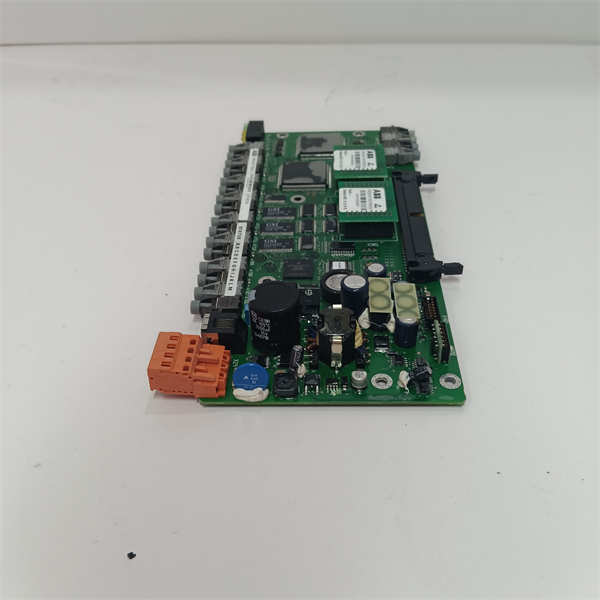
ABB PPC907BE 3BHE024577R0101 It is a high-performance control board designed by ABB for the power systems and automation control field, specifically developed for power equipment regulation and protection systems. This control unit features efficient and reliable performance, suitable for complex power management and automation applications, commonly found in power plants, substations, and distribution systems. The module can provide precise voltage and current monitoring and regulation functions, ensuring the stable operation of the power system.
Product Detailed Introduction
ABB PPC907BE 3BHE024577R0101 The control board is mainly used for the automation control of power systems and the monitoring and regulation of electrical equipment. As a key component in ABB's power automation control series, the PPC907BE can seamlessly integrate with multiple ABB power management systems (such as DCS systems) and supports power regulation, power quality monitoring, protection control, and other functions through its powerful processing capabilities and rich interfaces.
This control board supports real-time data acquisition and processing for multiple electrical systems, can monitor the operating status of power equipment, and promptly detect and diagnose system faults. Through precise algorithmic models, the PPC907BE can optimize energy usage, improve the operational efficiency of power equipment, and reduce energy waste.
PPC907BE Equipped with various input and output interfaces, such as analog signal input, digital I/O, and communication interfaces with other ABB devices, ensuring system scalability and flexibility. Together with ABB's advanced dispatch system, it can provide precise control in complex scenarios such as dynamic load adjustment, parallel power generation, and emergency handling.
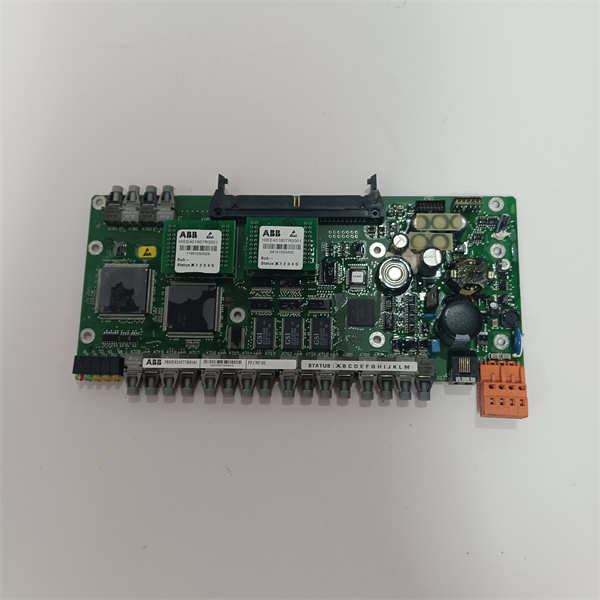
ABB PPC907BE 3BHE024577R0101
Core Features and Advantages
? The power system has strong regulation capability:
Precise voltage and current control functions, suitable for various power system scenarios.
? High reliability design:
The circuit design has undergone strict industrial-grade certification, adapting to high temperatures, low temperatures, humidity changes, and other conditions in complex power environments.
? Real-time Monitoring and Fault Diagnosis:
Able to collect data from power equipment in real time, warn of potential faults, and respond quickly.
? Supports multiple interfaces:
Supports analog signal input, digital I/O, Modbus communication and other interface methods, compatible with other ABB devices, ensuring convenient system integration.
? Modular design, easy to maintain:
Through modular design, faults can be quickly replaced when they occur, reducing downtime and improving operational efficiency.
? Strong software compatibility:
Compatible with ABB's common automation platforms and power monitoring software (such as MicroSCADA), supporting flexible configuration.
Technical specifications
| Parameter Name | Parameter value |
|---|---|
| Product Model | PPC907BE 3BHE024577R0101 |
| Brand | ABB |
| Module Type | Power System Control Unit |
| Compatible system | Power management, distribution, and generation automation systems |
| Input voltage | 24V DC (control terminal) |
| Input signal | Analog quantity (voltage/current), digital quantity (switch quantity) |
| Output signal | Analog output, digital output, control signal |
| Communication interface | Modbus, CAN, RS-485, etc. |
| Supported Protocol | IEC 61850、Modbus RTU、IEC 61131-3 |
| Ambient temperature | -20°C ~ +60°C |
| Storage Temperature | -40°C ~ +85°C |
| Relative humidity | 5% ~ 95% (non-condensing) |
| Certification standards | CE、RoHS、UL |
| Protection level | IP20 |
| Size | 180mm x 150mm x 25mm |
| Weight | 0.5kg |
Examples of application scenarios
PPC907BE 3BHE024577R0101 It is widely used in the following fields of electric power and industrial automation:
-
⚡ Power plant: As the core control unit in the power dispatching system, it manages the stable output of generator units, load regulation, frequency control, and other functions.
-
? SubstationMonitor voltage and current parameters, adjust the power flow in real-time, and ensure the stable operation of the power grid.
-
? Distribution Automation System: Provide automation solutions such as load management and power monitoring for industrial plants or urban power grids.
-
?️ Metallurgical industry: High-precision control of large power equipment such as steel and electrolytic aluminum.
-
? Shipping industryElectric power equipment control and optimization, improving energy utilization and ship operation safety.
Recommended models
| Model | Explanation |
|---|---|
| PPC905BE | Control module adapted for power equipment regulation, with strong compatibility |
| PPC900BE | Basic control unit in the ABB power automation control series |
| PPC908BE | High-load power regulation dedicated module, supports high-power motor control |
| SDCS-CON-2 | Control logic board, suitable for large-scale power system integration |
| MicroSCADA | ABB power automation monitoring platform, supports PPC series control modules |
| DCS500 Series | Digital control system applicable to power systems, supporting multiple module linkage |
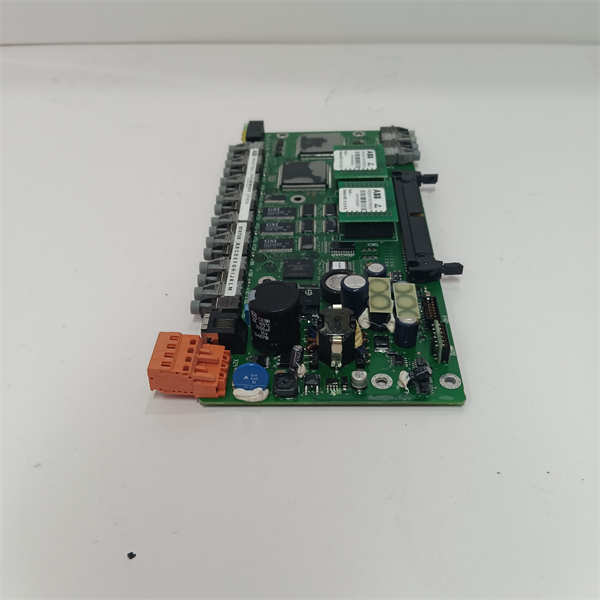
ABB PPC907BE 3BHE024577R0101
Installation and Maintenance Recommendations
✅ Installation Recommendations:
-
Please ensure that the module is securely connected to the control cabinet to avoid signal interference caused by loosening due to vibration.
-
Please refer to the product manual when wiring to ensure correct connections and avoid damage to the equipment caused by incorrect wiring;
-
Ensure the equipment is used in a clean, dry environment, and avoid prolonged exposure to humid or high-temperature conditions.
?️ Maintenance recommendations:
-
Regularly clean the device interfaces and circuit board surfaces to prevent dust accumulation from affecting heat dissipation;
-
Use the monitoring software provided by ABB to regularly check the system's operating status and promptly identify potential problems;
-
When a malfunction occurs, first perform software diagnostics, and replace spare parts if necessary to reduce downtime.