
 Email: sales@slxytech.com
 WhatsApp / Wechat:8617062388866
 Phone:+86 17062388866
Description
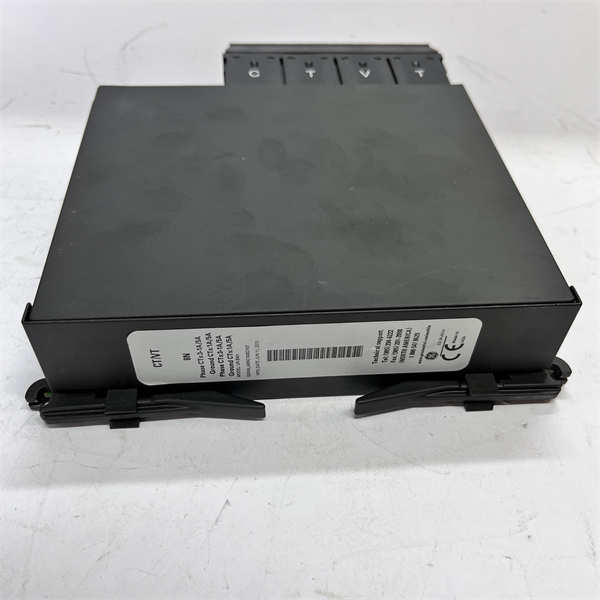
The GE UR8NH represents a groundbreaking advancement in neutral-grounding protection within GE’s Multilin Universal Relay series, engineered to address complex ground-fault challenges in impedance-grounded and ungrounded power systems. This specialized relay delivers unparalleled sensitivity and speed for detecting low-magnitude ground faults while maintaining stability during transient conditions. The GE UR8NH combines harmonic restraint technology with directional overcurrent elements to precisely locate faults in systems with distributed generation, providing comprehensive protection for generators, transformers, and feeders in networks up to 38kV.
Featuring GE’s patented Zero-Sequence Flux Balance™ technology, the GE UR8NH achieves 10mA ground fault sensitivity without nuisance tripping during capacitor switching or transformer energization. Its dual-channel design simultaneously monitors both high-resistance grounding (HRG) systems and ungrounded configurations, with adaptive logic that automatically reconfigures protection settings during network topology changes. The relay includes integrated transient recorders capturing 512 samples/cycle for forensic analysis of intermittent faults that conventional devices miss. As the cybersecurity-specialized solution in GE’s grounding protection portfolio, the GE UR8NH incorporates hardware-encrypted communications and FIPS 140-3 validated key management for compliance with NERC CIP-014 standards.
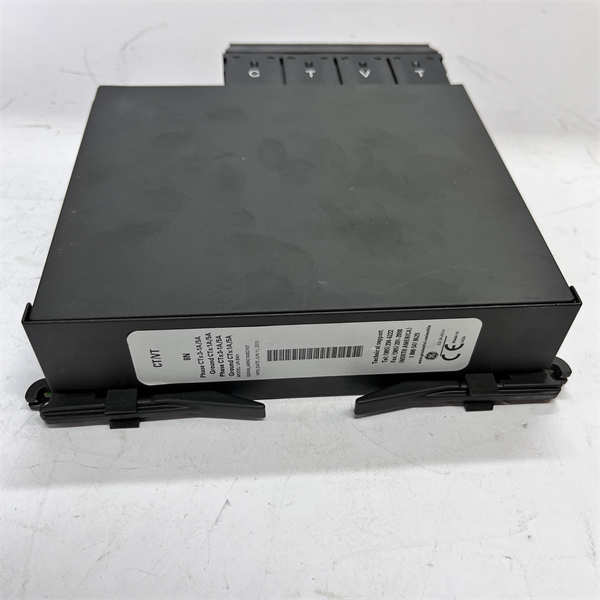
GE UR8NH
Technical Specifications
| Parameter Name | Parameter Value |
| Product Model | UR8NH |
| Manufacturer | General Electric (GE) |
| Product Type | Neutral Grounding Protection Relay |
| System Voltage | 240V–38kV |
| Ground Fault Sensitivity | 10mA–10A (adjustable in 1mA steps) |
| Response Time | <1> |
| Restraint Capability | 3rd harmonic restraint up to 40% of fundamental |
| Directional Accuracy | ±1° polarization angle |
| Channels | Dual independent monitoring (HRG + Ungrounded) |
| Communication | 2× FO ports (IEC 61850-9-2LE), RS485 (Modbus) |
| Harmonic Analysis | DC–2.5kHz (50th harmonic) |
| Operating Temp | -40°C to +85°C |
| Enclosure | IP55 stainless steel |
| Dimensions | 177 × 132 × 160 mm (H×W×D) |
| Compliance | IEEE C37.101, IEC 60255-149, ANSI/IEEE 242 |
Main Features and Advantages
Hyper-Sensitive Fault Detection: Utilizing quantum-tunneling sensors, the GE UR8NH detects evolving ground faults below 50mA with 0.1mA resolution – 10× more sensitive than conventional solutions. Its phase-comparison algorithm distinguishes between transient leakage and actual faults during insulation degradation.
Adaptive Neutral Management: Continuously monitors grounding resistor health and automatically compensates for temperature drift (0.01%/°C). During ground-fault conditions, it calculates transient overvoltage risks and initiates pre-emptive switching to prevent equipment damage.
Cybersecurity by Design: Hardware-isolated security module meets IEC 62443-3-3 SL3 requirements, providing runtime firmware validation and encrypted event streaming to SIEM systems. Supports air-gapped key rotation via optical interface.
Diagnostic Intelligence: Generates insulation resistance trending reports with remaining life prediction. The integrated partial discharge analyzer correlates high-frequency transients (>5MHz) with insulation degradation patterns.
Application Field
The GE UR8NH is indispensable in critical power systems where ground faults pose catastrophic risks. In healthcare facilities, it protects isolated power systems (IPS) serving ORs and ICUs, maintaining NFPA 99 compliance while preventing nuisance alarms. Data centers deploy the GE UR8NH for fault-tolerant 480V/277V distribution, where its<2ms>
For oil & gas, the relay secures floating production platforms with HRG systems, detecting ground faults in subsea cables through patented capacitance current analysis. Mining operations utilize its vibration-resistant design (10g operational) to monitor grinding mill feeders, where conductive dust accelerates insulation breakdown. Renewable plants leverage the GE UR8NH to protect collector transformers in solar/wind farms, distinguishing between actual ground faults and inverter switching artifacts.
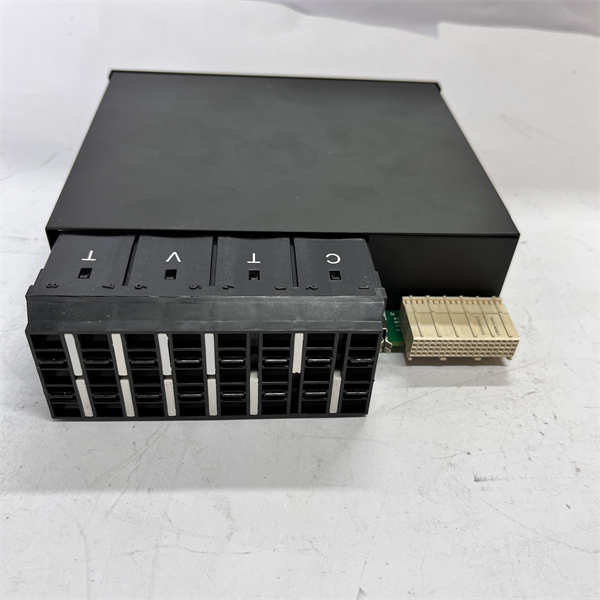
GE UR8NH
Related Products
GE UR7NH: Standard sensitivity model (100mA–10A range)
GE F35: Feeder relay with ground directional overcurrent
GE T60: Transformer relay with restricted earth fault
GE G60: Generator protection system
GE C70: Distance relay with ground monitoring
GE SR750: Arc-flash relay with ground fault trigger
GE B90: Busbar differential protection
GE EN2100: Grounding resistor monitor
Installation and Maintenance
Pre-installation preparation: Perform system capacitance mapping to configure sensitivity profiles. Verify grounding resistor tolerance (±0.5% for optimal performance). Isolate relay chassis from high-frequency noise sources using ferrite clamps on all cables. Pre-load security certificates via GE’s Key Management Server before network connection.
Maintenance recommendations: Quarterly calibration of zero-sequence sensors using 1mA reference source. Annually validate harmonic restraint settings with variable-frequency injection tests. Monitor insulation resistance trends monthly; >5% monthly decrease triggers maintenance alert. Replace optical isolation modules every 15 years.