
 Email: sales@slxytech.com
 WhatsApp / Wechat:8617062388866
 Phone:+86 17062388866
Description
The Alstom SDK-C0167-1 12004-08-01 represents the pinnacle of Alstom’s rail signaling technology, engineered for ultra-high-availability train control in mission-critical environments. As a core component of the SDK (Signaling Development Kit) Hot-Standby series, this module delivers seamless 1+1 redundancy with sub-millisecond failover, ensuring uninterrupted operation for ERTMS/ETCS Level 3 “moving block” systems. The Alstom SDK-C0167-1 12004-08-01 integrates dual ARM Cortex-R52F processors with hardware-based safety lockstep, executing SIL-4 certified algorithms for train separation, speed profile enforcement, and track vacancy detection. Its modular design supports field-upgradable I/O cards, allowing operators to adapt to evolving network demands without hardware replacement. With native cybersecurity compliance per EN 50657 and integrated AI-driven anomaly detection, the module autonomously thwarts zero-day threats while processing over 50,000 data points per second from balises, radars, and trackside sensors.
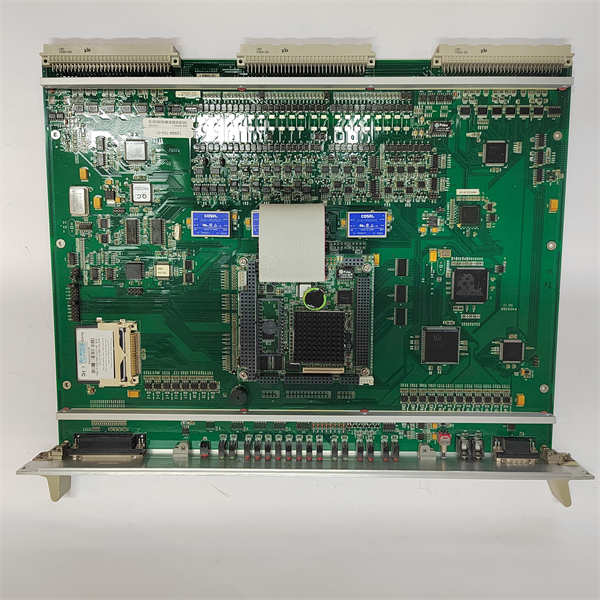
ALSTOM SDK-C0167-1 12004-08-01 SBS07M076B
Technical Specifications
| Parameter Name | Parameter Value |
| Product Model | Alstom SDK-C0167-1 12004-08-01 |
| Manufacturer | Alstom |
| Product Type | Hot-Standby Vital Control Module |
| Input Voltage | 24–110 VDC (Dual Redundant, Auto-Switching) |
| Operating Temperature | -40°C to +85°C (Conformal Coating Option) |
| Safety Certification | SIL-4 (EN 50129), Cybersecurity Level “Secure” (EN 50657) |
| Communication Protocols | 2x 10G SFP+ Fiber, TSN Ethernet, IEC 62439-3 (HSR/PRP), Legacy RS-422 |
| Processing Power | Dual ARM Cortex-R52F @ 800 MHz (Lockstep + Asymmetric Check) |
| Memory | 8 GB LPDDR4 RAM, 128 GB NVMe Storage (Log Retention) |
| Hot-Swap Time | <5> |
| Physical Dimensions | 240 × 180 × 60 mm (DIN Rail Mount) |
| Shock/Vibration | 10g / 5g (IEC 61373 Cat. 1 Class B) |
| AI Co-Processor | 2 TOPS NPU for Predictive Failure Analysis |
| Certifications | EN 45545-2 (Fire Safety), IEC 60571 (EMC) |
Main Features and Advantages
Zero-Downtime Architecture: The Alstom SDK-C0167-1 12004-08-01 employs synchronized dual-plane processing with continuous memory mirroring, enabling maintenance or component replacement without interrupting train operations. Its patented “SyncLink” technology guarantees <1>
AI-Powered Resilience: An integrated neural processing unit (NPU) analyzes sensor data patterns to predict failures 72+ hours in advance – detecting capacitor degradation, connector corrosion, or signal drift before safety margins are breached.
Cybersecurity Fortification: Hardware-enforced secure boot, runtime intrusion detection, and quantum-resistant encryption keys meet EU Railway Agency TS 50701 requirements. Unauthorized configuration changes trigger immediate cryptographic erasure of safety logic.
Legacy Integration: Native support for legacy rail protocols (e.g., LZB, SELCAB) allows phased migration to ERTMS, while FRMCS-ready interfaces future-proof 5G/6G communication.
Application Field
The Alstom SDK-C0167-1 12004-08-01 dominates ultra-reliable deployments:
High-Speed Rail: Processes moving-block calculations at 350+ km/h, dynamically adjusting train separation using LiDAR and satellite positioning data.
Metro Core Systems: Manages driverless train operations (DTO) with 99.9999% uptime, synchronizing doors, platform screens, and traction power.
Heavy Haul Freight: Monitors axle loads and brake pressure across 3-km-long trains in mining operations, enforcing speed restrictions on gradients.
Tunnel Safety: Integrates with gas/fire sensors to trigger emergency protocols, controlling ventilation and evacuation routes.
Cross-Border Corridors: Automatically switches signaling standards (e.g., ETCS to CTCS) at national borders without train stoppage.
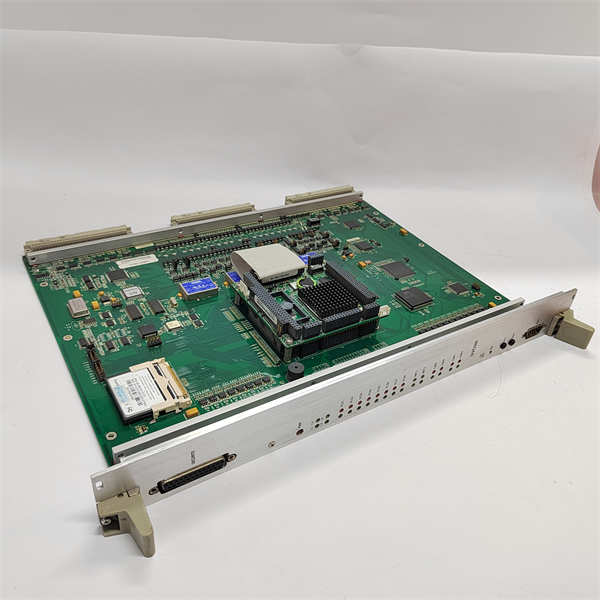
ALSTOM SDK-C0167-1 12004-08-01 SBS07M076B
Related Products
Alstom SDK-C0167-2: Non-redundant cost-optimized variant for secondary lines.
Alstom RSD-5500: Rugged trackside sensor hub with PoE+ for SDK-C0167-1 integration.
Alstom EVC-500: Onboard computer with HSR/PRP compatibility.
Alstom FIBER-SW28: Managed TSN Ethernet switch for fiber ring topologies.
Alstom PSU-8800: 110VDC power shelf with hot-swap modules.
Alstom HealthHub Pro™: Predictive analytics suite for fleet-wide SDK-C0167-1 monitoring.
Installation and Maintenance
Pre-installation preparation: Verify seismic bracing for areas exceeding Zone 4 (IBC 2018). Use OM4 multi-mode fiber with LC connectors for SFP+ ports. Pre-load configuration via signed .sdkproj files in Alstom’s RailStudio® IDE. Validate grounding resistance <0>
Maintenance recommendations: Utilize the Alstom SDK-C0167-1 12004-08-01’s self-test portal to schedule component swaps during maintenance windows. Replace air-filter cartridges annually in high-dust environments. Firmware updates require dual-operator authentication with physical security tokens.