
 Email: sales@slxytech.com
 WhatsApp / Wechat:8617062388866
 Phone:+86 17062388866
Description
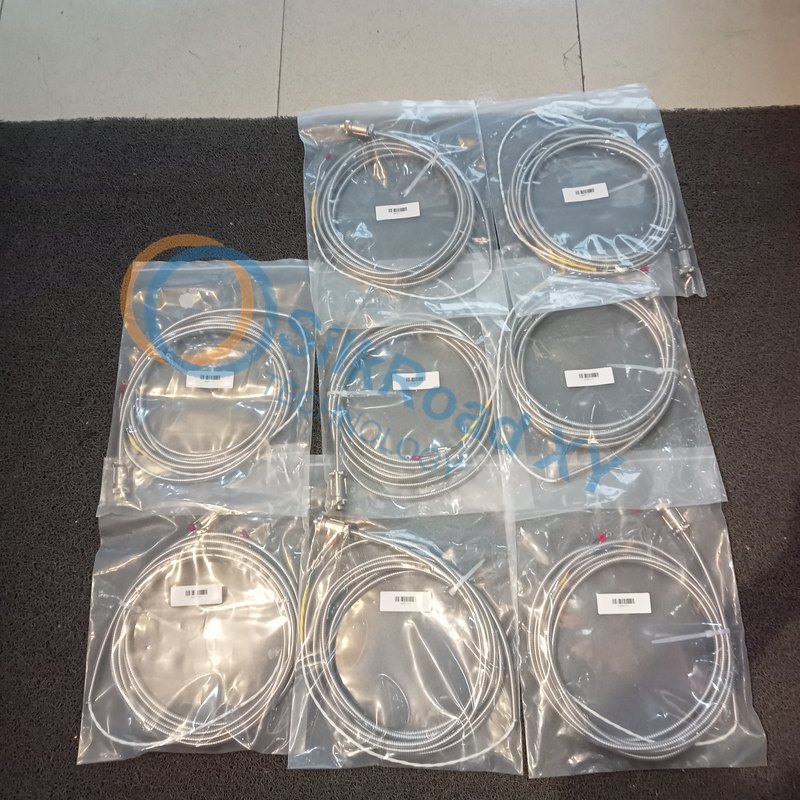
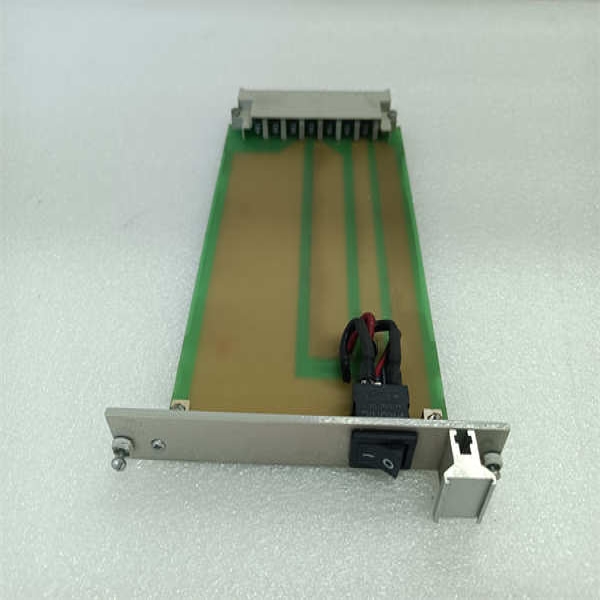
The GE WES13-3 is a high-precision conductivity/resistivity analyzer module from GE’s Water & Environmental Solutions (WES) series, engineered for rigorous water quality monitoring in critical industrial processes. As part of GE’s legacy analytical instrumentation portfolio (now often associated with Baker Hughes or Emerson’s automation brands post-acquisitions), this module delivers reliable, continuous measurement of liquid purity across power generation, pharmaceutical, and microelectronics applications. The GE WES13-3 integrates seamlessly into WES monitoring systems, providing essential data for controlling demineralization processes, detecting contamination, and ensuring compliance with purity standards like USP<645>. Its core function involves measuring conductivity (0.055 µS/cm to 200 mS/cm) and derived resistivity, with optional temperature compensation for accuracy across varying conditions.<!--645-->
Designed for harsh environments, the GE WES13-3 features robust construction with corrosion-resistant materials and advanced signal processing to minimize noise interference. It supports multiple calibration modes and offers configurable alarm outputs for real-time process deviations. Positioned as an industry benchmark for pure water analysis, this module reduces operational risks through early detection of ion exchange resin breakthrough or system leaks. The GE WES13-3 enhances process efficiency by enabling predictive maintenance and automated control loops, making it indispensable for industries where water purity directly impacts product quality or equipment integrity. Its modular design simplifies integration into new installations or legacy WES frameworks, ensuring long-term operational reliability.
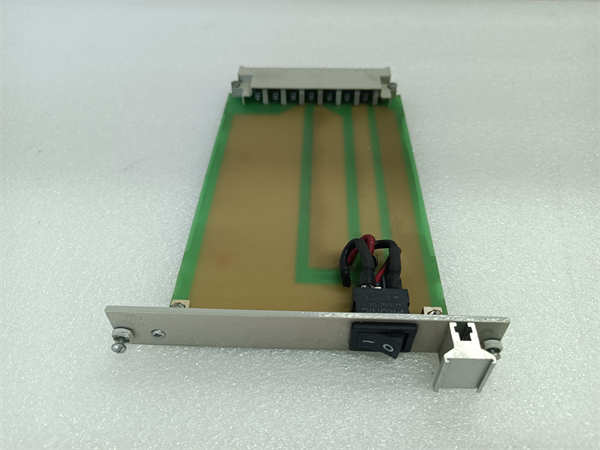
GE WES13-3
Technical Specifications
| Parameter Name | Parameter Value |
| Product Model | WES13-3 |
| Manufacturer | GE (General Electric) |
| Product Type | Conductivity/Resistivity Analyzer Module |
| Measurement Range | Conductivity: 0.055 µS/cm to 200 mS/cm; Resistivity: 5 Ω·cm to 18.3 MΩ·cm |
| Accuracy | ±1% of reading or ±0.1 µS/cm (whichever is greater) |
| Temperature Compensation | Automatic (0–100°C), linear or nonlinear algorithms |
| Sensor Input | 3-electrode conductivity cell (e.g., GE SE 218) |
| Output Signals | Isolated 4–20 mA (primary & secondary), Modbus RTU |
| Relay Outputs | 2 SPDT alarms (configurable for Hi/Lo/Off) |
| Operating Temperature | 0°C to 50°C (ambient) |
| Enclosure Rating | NEMA 4X (IP66) |
| Power Supply | 100–240 V AC, 50/60 Hz |
| Dimensions | 144 x 144 mm panel cutout |
| Certifications | CE, UL |
Main Features and Advantages
The GE WES13-3 excels in delivering laboratory-grade accuracy in continuous industrial operation. Its advanced temperature compensation algorithms account for nonlinear fluid behaviors, ensuring precise readings across extreme thermal gradients – critical for steam cycle chemistry in power plants or ultrapure water (UPW) in semiconductor fabs. Dual isolated 4–20mA outputs allow simultaneous transmission of conductivity and temperature/resistivity values to DCS/PLC systems, while configurable alarm relays enable instant shutdowns during purity excursions.
Intuitive Diagnostics and Calibration: Featuring auto-ranging capability and self-diagnostics, the GE WES13-3 simplifies maintenance. On-screen calibration prompts and password-protected access prevent unauthorized adjustments. Its compatibility with GE’s SE 218 series electrodes ensures optimal signal stability, even in low-conductivity applications (<1>
Integration Flexibility: Unlike basic transmitters, the GE WES13-3 supports Modbus RTU for direct SCADA integration, enabling centralized data logging and remote parameter configuration. This reduces cabling costs and facilitates predictive analytics. Backward compatibility with existing WES system racks and sensors protects infrastructure investments while upgrading measurement capabilities. For industries facing stringent regulatory audits, the GE WES13-3 maintains comprehensive event logs, supporting compliance reporting without additional software.
Application Field
The GE WES13-3 is indispensable in industries demanding stringent water purity control. In power generation, it monitors condensate polish effluent, boiler feedwater, and turbine steam purity to prevent corrosion and scaling – critical for combined-cycle plants and nuclear facilities where conductivity excursions indicate cation resin exhaustion or condenser leaks. Semiconductor manufacturers rely on the GE WES13-3 for UPW (Ultra-Pure Water) production monitoring at DI water polishing loops, CMP (Chemical Mechanical Planarization) feeds, and tool rinse stations, where even ppb-level ionic contamination causes wafer yield loss.
Pharmaceutical and biotechnology plants deploy the GE WES13-3 for WFI (Water-for-Injection) and purified water systems, ensuring compliance with USP/EP conductivity thresholds for critical process steps. In chemical processing, it safeguards ion exchange regenerations and detects heat exchanger leaks. Municipal water facilities use it for post-reverse osmosis validation and desalination brine concentration control. The module’s rugged design also suits offshore platforms monitoring produced water discharge and food/beverage applications verifying CIP (Clean-in-Place) rinse water conductivity endpoints.
Related Products
GE SE 218 Conductivity Cell: Primary 3-electrode sensor optimized for low-range conductivity measurements with the WES13-3.
GE WES15-3 pH/ORP Analyzer: Complementary module for monitoring acidity/oxidation-reduction potential in same WES panel.
GE WES11-3 Flow Monitor: Flow measurement module for integrating totalized volume data with purity analytics.
GE WESDOME Controller: Legacy rack-mount controller compatible with WES13-3 modules for centralized system management.
Emerson 5081-W Conductivity Transmitter: Modern successor platform (post-GE acquisition) offering enhanced connectivity.
GE WES18-3 Silica Analyzer: Specialized module for trace silica detection in boiler water/steam cycles.
GE WES Power Supply Module: Dedicated PSU for WES analyzer chassis.
GE WES Calibration Solutions: Certified conductivity standards for field calibration.
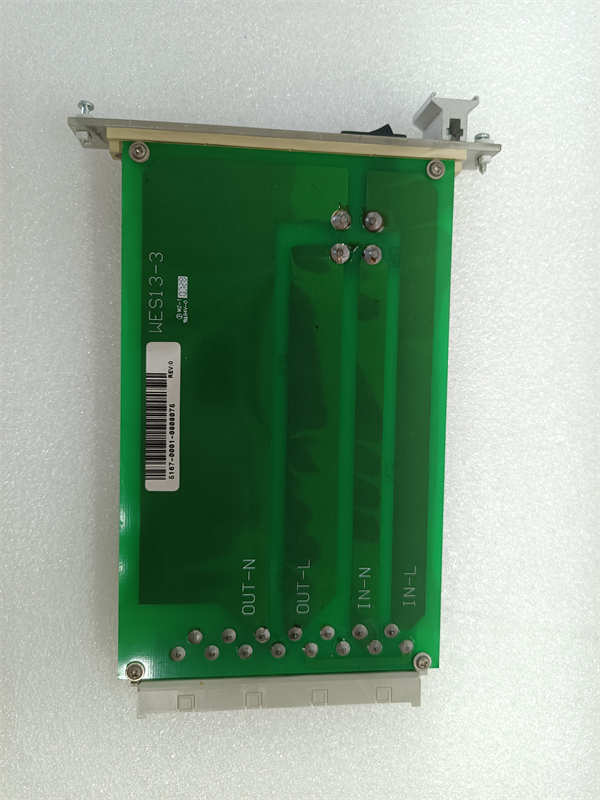
GE WES13-3
Installation and Maintenance
Pre-installation preparation: Verify mounting location avoids vibration, direct sunlight, or exposure to chemicals. Ensure proper grounding per NEC/CEC standards using dedicated ground wire. Confirm sensor cable length ≤100m (shielded twisted pair). Flush piping before sensor installation to remove debris. Calibrate using NIST-traceable standards at expected operating temperature. Configure DCS/PLC input ranges to match GE WES13-3’s 4–20mA output scaling.
Maintenance recommendations: Perform quarterly sensor cleaning with mild detergent for fouling prevention. Recalibrate every 6 months or after sensor replacement. Inspect electrode integrity annually – replace if coating or physical damage exists. Monitor diagnostic alerts for abnormal impedance or temperature readings. Maintain spare sensor/flow cell O-rings to prevent leaks. For firmware updates, use GE-approved tools only. Keep calibration records for audit trails. In ultrapure water systems, allow 24-hour polarization stabilization after maintenance.