
 Email: sales@slxytech.com
 WhatsApp / Wechat:8617062388866
 Phone:+86 17062388866
Description
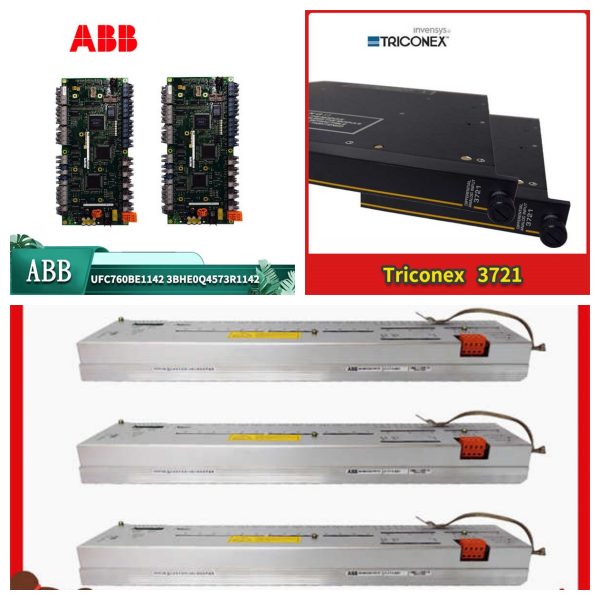
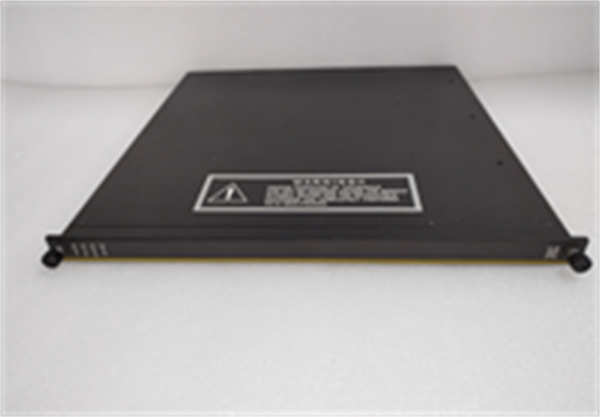
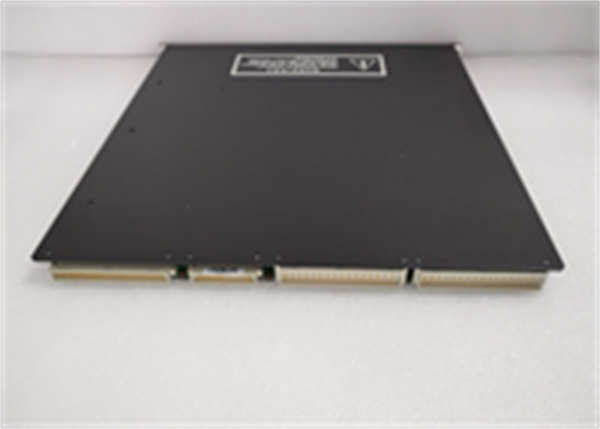
The Triconex 3720 is a high-density, 32-Channel Non-Isolated Digital Input Module designed for the Tricon v9 and Tricon v10 Safety Instrumented Systems (SIS) by Triconex, a critical brand under Emerson Automation. This module serves as a primary interface for reading the status of a large number of discrete field devices, such as pressure switches, limit switches, flow switches, and emergency stop buttons, into the safety controller. The core function of the Triconex 3720 is to convert the DC voltage signals from these field devices into digital logic levels that the main TMR processor (e.g., a 3625 series) can interpret. It is engineered for applications requiring a high number of input points where individual channel isolation is not a system requirement, providing a cost-effective solution for monitoring non-critical status signals or devices that are already isolated externally.
The value of the Triconex 3720 lies in its ability to significantly increase the I/O point capacity of a Tricon system without consuming multiple rack slots, thereby optimizing the system’s footprint and overall cost per point. While it is a non-isolated module, it is designed and manufactured to the same high reliability standards as all Triconex components, ensuring robust performance in industrial environments. The module provides essential diagnostic capabilities to monitor its own health and the status of the field wiring. The Triconex 3720 is a workhorse module, ideal for gathering a wide array of status and permissive signals that contribute to the overall safety logic without being the primary source of critical shutdown initiation, making it a vital component for comprehensive safety system monitoring.
3720 TRICONEX
Technical Specifications
| Parameter Name | Parameter Value |
| Product Model | 3720 |
| Manufacturer | Triconex (Emerson) |
| Product Type | 32-Channel Non-Isolated Digital Input Module |
| Series/Platform | Tricon v9 / v10 Safety Instrumented System (SIS) |
| Number of Channels | 32 digital input channels |
| Input Type | Sinking or Sourcing, DC voltage (e.g., 24 VDC, 48 VDC) |
| Input Groups | Channels are typically grouped (e.g., in sets of 8 or 16) with common reference points |
| Isolation | Non-isolated between channels within a common group |
| Point Density | High-density design, maximizing I/O count per slot |
| Diagnostics | Module-level diagnostics for health monitoring |
| Backplane Communication | Interfaces with the TMR processor via the Tricon backplane |
| Power Supply | Powered by the system backplane; field power is supplied externally |
Main Features and Advantages
The Triconex 3720 is distinguished by its exceptionally high channel count and cost-efficiency for large-scale digital input applications. Its primary advantage is its ability to monitor thirty-two discrete signals from a single slot in the Tricon rack. This high density is ideal for applications requiring the status of numerous devices, such as valve position limit switches, pump running status indicators, or cabinet door alarms, allowing for a more comprehensive view of the plant state within the safety system without requiring extensive hardware.
Despite being a non-isolated module, the Triconex 3720 is built for reliability within the Tricon ecosystem. It includes module-level diagnostics that can detect internal faults and report them to the main TMR processor, ensuring the integrity of the system is maintained. The module is designed for straightforward integration and is typically used for signals where the consequences of a single point of failure are mitigated by the overall system design or where the field devices themselves provide sufficient isolation. The combination of high point density, proven reliability, and integration with the robust Tricon diagnostic framework makes the Triconex 3720 an efficient and practical solution for expanding the monitoring capabilities of a safety instrumented system.
Application Field
The Triconex 3720 is deployed in industries where monitoring a large number of discrete status signals is required for overall system supervision and permissive logic within a safety system. Its primary application is in oil and gas and petrochemical plants, where it is used to monitor the status of numerous auxiliary devices in Emergency Shutdown (ESD) and Fire and Gas (F&G) systems. This includes monitoring the open/closed status of manual valves (via limit switches), the on/off status of motors, and the health of other subsystems.
In power generation, particularly in burner management systems (BMS) and turbine control, the Triconex 3720 can be used to monitor a multitude of permissives and equipment status signals that are part of the larger safety sequence. It is also used in large compressor stations to monitor various plant status points. The module is typically applied for signals that contribute to pre-shutdown alarms, sequence permissives, and overall health monitoring rather than being the direct initiator of a critical shutdown action, for which isolated input modules would be used.
Related Products
3625 / 3625A: The Main TMR Processor modules that receive and process the input data from the 3720 module.
3700A / 3708E: Digital Output Modules that act upon the logic decisions made using the input data.
3710: A 16-Channel Isolated Digital Input Module, used for critical shutdown initiation signals where isolation is required.
3501TN2: A Termination Network Module, which provides the physical interface for field wiring to the I/O modules.
4351B: An Analog Input Module, which brings in continuous process variables like pressure and temperature.
3720 TRICONEX
Installation and Maintenance
Pre-installation preparation: Before installing the Triconex 3720, ensure the Tricon system is in a safe state according to the site’s Safety Requirements Specification (SRS). While the system may support hot-swapping, a risk assessment should be performed. Verify that the module’s configuration (e.g., input voltage type) matches the field devices it will be connected to. Proper handling using electrostatic discharge (ESD) precautions is essential.
Maintenance recommendations: The Triconex 3720 module itself requires minimal preventive maintenance. Its primary maintenance function is through system diagnostics, which will report module health. If a fault is detected, the module can be replaced. For non-isolated modules, special attention should be paid to the field wiring during installation to avoid ground loops, as the channels share common reference points. Any maintenance should be performed by personnel trained on the Tricon system, following all applicable safety procedures.