
 Email: sales@slxytech.com
 WhatsApp / Wechat:8617062388866
 Phone:+86 17062388866
Description
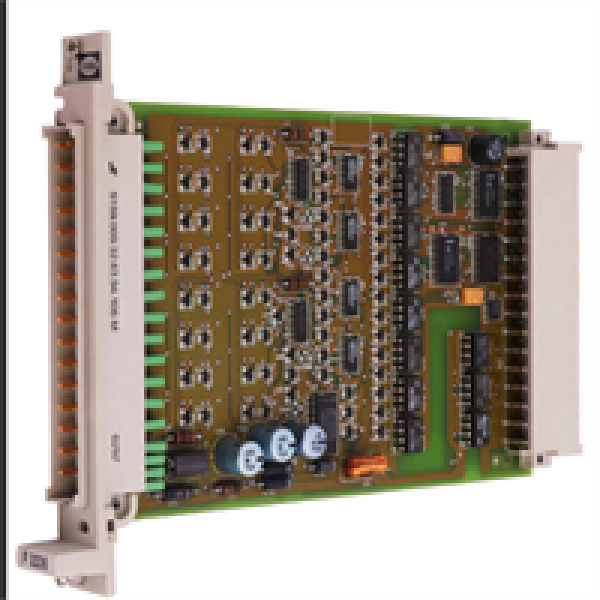
The HIMA F3231 is a highly specialized, fail-safe processor module belonging to the HIMatrix safety controller family. It functions as the central processing unit (CPU) for safety-critical applications in industrial automation. The F3231 is based on a dual-redundant, 1-out-of-2 (1oo2) architecture, where two identical processors work in parallel and constantly cross-check each other. This design is what makes the module fault-tolerant, ensuring that if one processor fails, the system automatically detects the discrepancy and moves to a safe state without any interruption. This is a critical feature for industries where safety is non-negotiable.
The primary purpose of the F3231 is to execute safety logic with high speed and reliability. It’s a key component in safety instrumented systems (SIS) and is designed to protect personnel, assets, and the environment. Its robust design allows it to operate reliably in harsh industrial environments, and its certifications meet the most stringent international safety standards. The HIMatrix F3231 provides the necessary processing power and reliability for the most demanding safety applications, from emergency shutdown systems to fire and gas control.
F3231 HIMA
Technical Specifications
| Parameter Name | Parameter Value |
| Product Model | F3231 |
| Manufacturer | HIMA |
| Product Type | Safety PLC Processor Module |
| Compatible Platform | HIMatrix Series |
| CPU Architecture | Dual Redundant (1oo2) |
| Safety Integrity Level (SIL) | SIL 3 (IEC 61508) |
| Performance Level (PL) | PLe (ISO 13849) |
| Power Supply | 24 VDC |
| Power Consumption | Max. 5 W |
| Operating Temperature | -40°C to +70°C |
| Communication | Ethernet, RS-232, Modbus TCP |
| Certifications | TÜV, IEC 61508, ISO 13849, ATEX |
Export to Sheets
Main Features and Advantages
The HIMA F3231 stands out in the safety automation world because it’s built from the ground up for functional safety, not retrofitted. Its dual-redundant 1oo2 architecture is a huge selling point. This isn’t just two processors running; they constantly cross-check each other’s calculations in real-time. If one processor fails or produces a different result, the system immediately recognizes the fault and enters a safe state. This is a level of fault tolerance that a standard PLC can’t match. This architecture also allows for online diagnostics, meaning you can monitor the health of the module without taking the entire system offline.
The F3231 also offers a powerful combination of speed and safety. It executes safety logic incredibly quickly, which is critical for emergency shutdown systems (ESD) and fire and gas (F&G) systems. In high-risk environments like oil and gas refineries or chemical plants, a few milliseconds can be the difference between a minor incident and a catastrophe. It’s a key component in any safety instrumented system (SIS). Lastly, its wide operating temperature range and rugged design mean it can handle extreme conditions without a hitch, a must-have for industrial applications.
Application Field
The HIMA F3231 is deployed in industries where safety is not just a priority, but a regulatory and operational requirement. In the oil and gas industry, it’s the core of emergency shutdown systems on platforms and in refineries, protecting against overpressure or gas leaks. In chemical plants, it manages critical safety loops for reactors and process equipment, preventing runaway reactions.
Its reliability also makes it perfect for power generation facilities, where it can be used for boiler protection, turbine control, and other critical functions. The F3231 also finds its place in mining operations, where it ensures the safety of conveyors and ventilation systems in underground environments. Essentially, any place where machinery, processes, or conditions pose a significant risk to personnel or the environment is an ideal application for the HIMA F3231.
Related Products
HIMA F3236: A similar HIMatrix processor module, often used in redundant configurations with the F3231.
HIMA F3101: A HIMatrix standard I/O module that connects to the F3231.
HIMA F6215: A power supply module for the HIMatrix system, providing power to the F3231.
HIMA F35: An older generation HIMA processor from the Planar4 series, which the HIMatrix line replaced.
HIMax Series: A more powerful safety controller family for larger, more complex applications that goes beyond what the F3231 can do.
F3231 HIMA
Installation and Maintenance
Installation prepartion: Before you install the F3231, you must make sure the HIMatrix backplane is de-energized. It’s crucial to follow the safety guidelines in the manual to avoid any electrical hazards. The F3231 is a hot-swappable module, but it’s always best practice to ensure all power is off before handling safety-critical components. You’ll need to slide the F3231 firmly into the designated processor slot on the backplane until it clicks into place. Ensure all connections are secure, and verify the physical integrity of the module before powering up the system.
Maintenance recommendations: The F3231 is designed for minimal maintenance. Its internal diagnostics continuously monitor its health, and any issues will be flagged by LEDs on the front panel and through the engineering software. The key to maintenance is proactive monitoring of these diagnostic indicators. You should also periodically check the surrounding environment to ensure it’s free of excessive dust or moisture. If a fault is detected, the F3231‘s hot-swappable design allows for quick and easy replacement without bringing down the entire system, a feature that significantly reduces downtime in critical applications.