
 Email: sales@slxytech.com
 WhatsApp / Wechat:8617062388866
 Phone:+86 17062388866
Description
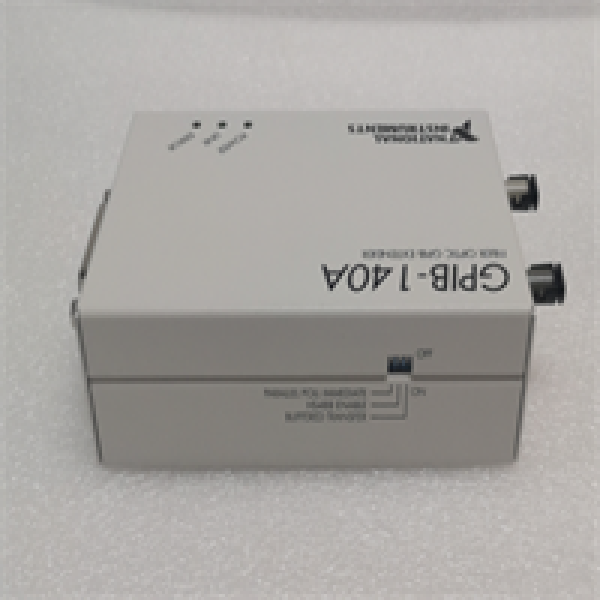
The NI GPIB-140A/2 is a high-performance PCI-based GPIB (General Purpose Interface Bus) interface card engineered by National Instruments for precision instrument control in industrial automation, test engineering, and measurement system integration. Designed as a robust solution for legacy and modern automated test environments, the NI GPIB-140A/2 enables seamless communication between PC-based systems and IEEE 488-compatible instrumentation such as oscilloscopes, power supplies, data acquisition units, and programmable logic controllers. As part of National Instruments’ comprehensive family of interface hardware, the NI GPIB-140A/2 delivers deterministic, low-latency connectivity essential for time-critical applications where timing accuracy and data integrity are paramount. Its integration within the NI-488.2 driver ecosystem ensures full compatibility with LabVIEW, LabWindows/CVI, .NET, and other development platforms, making it a preferred choice for engineers building scalable, multi-instrument test racks.
Built on the proven reliability of the PCI bus architecture, the NI GPIB-140A/2 supports plug-and-play installation under Windows and select Linux distributions, offering backward compatibility with older GPIB devices while maintaining high throughput. The card excels in environments requiring stable, continuous operation—such as calibration labs, production testing floors, and R&D facilities—where consistent data transfer and system uptime are critical. With support for up to 14 connected instruments per bus and advanced error handling protocols, the NI GPIB-140A/2 serves as a central hub in complex test systems, enabling centralized control and synchronization across diverse equipment brands and models. Its durable design and long-term software support underscore its role as a dependable backbone in mission-critical automation infrastructures.
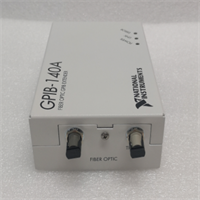
GPIB-140A 2 NI
Technical Specifications
| Product Model | NI GPIB-140A/2 |
| Manufacturer | National Instruments (NI) |
| Product Type | GPIB Interface Card |
| Bus Interface | PCI 2.2 compliant (32-bit, 5V or 3.3V) |
| GPIB Standard | IEEE 488.1, IEEE 488.2, SCPI compliant |
| Data Transfer Rate | Up to 8 MB/s (theoretical peak) |
| Typical Throughput | 1–2 MB/s (system-dependent) |
| Address Range | 0–30 (software-configurable) |
| Operating Temperature | 0°C to 55°C |
| Storage Temperature | –20°C to 70°C |
| Relative Humidity | 10% to 90% non-condensing |
| Installation | Internal PCI slot (full-length card) |
| Driver Support | NI-488.2, NI-VISA (Windows, Linux) |
Main Features and Advantages
High-Speed Deterministic Communication: The NI GPIB-140A/2 leverages the direct memory access (DMA) capabilities of the PCI bus to deliver fast, jitter-free data transfers between host systems and connected instruments. This ensures precise timing in sequence-driven tests, such as semiconductor parametric validation or aerospace sensor calibration, where microsecond-level coordination is required. Unlike USB-to-GPIB converters, the native PCI design eliminates protocol translation delays, significantly enhancing system responsiveness.
Robust Software Integration: Backed by National Instruments’ industry-standard NI-488.2 API and VISA (Virtual Instrument Software Architecture), the NI GPIB-140A/2 supports programming in LabVIEW, C/C++, Python, and MATLAB, enabling rapid development and deployment of custom test applications. Engineers can seamlessly integrate the NI GPIB-140A/2 into existing automation frameworks without extensive reconfiguration, reducing integration time and development costs.
Reliability in Industrial Environments: Constructed with EMI shielding and electrical isolation, the NI GPIB-140A/2 maintains signal integrity even in electrically noisy factory settings. Its solid-state design and absence of moving parts contribute to an extended service life, minimizing unplanned downtime. Additionally, automatic fault detection and bus arbitration features ensure graceful recovery from communication errors, further enhancing system stability.
Legacy System Modernization: For organizations maintaining decades-old test benches, the NI GPIB-140A/2 provides a cost-effective bridge between vintage instrumentation and modern PC-based control systems. It allows continued use of calibrated, high-value equipment without sacrificing performance or scalability.
Application Field
The NI GPIB-140A/2 is extensively deployed across industries that rely on precise, repeatable instrument control and data acquisition. In semiconductor manufacturing, the NI GPIB-140A/2 integrates into wafer test stations, coordinating source-measure units, parameter analyzers, and environmental chambers during device characterization. Aerospace and defense contractors utilize the NI GPIB-140A/2 in avionics test rigs, where it synchronizes signal generators, spectrum analyzers, and flight simulation hardware for rigorous functional verification. In automotive R&D labs, the NI GPIB-140A/2 links engine dynamometers with emission analyzers and data loggers, enabling real-time performance monitoring under controlled load conditions.
In pharmaceutical and biotechnology settings, the NI GPIB-140A/2 plays a crucial role in analytical instrument networks, automating HPLC (High-Performance Liquid Chromatography) and mass spectrometry workflows to improve throughput and reduce human error. Educational institutions and university research labs benefit from the NI GPIB-140A/2’s compatibility with a wide range of teaching instruments, allowing students to build hands-on experience with real-world automation systems. Power generation facilities employ the NI GPIB-140A/2 in calibration systems for turbine sensors and protection relays, ensuring compliance with regulatory standards. By serving as a universal communication layer across disparate devices, the NI GPIB-140A/2 reduces system complexity and enhances interoperability, making it indispensable in mixed-vendor environments.
Related Products
NI PCIe-GPIB+ – A modern successor with PCIe interface, offering higher bandwidth and compatibility with newer computer architectures
NI GPIB-USB-HS – High-speed USB-to-GPIB converter ideal for laptop-based test systems and portable applications
NI PCI-GPIB – Earlier PCI GPIB interface; the NI GPIB-140A/2 offers improved firmware and enhanced OS support
NI GPIB-232CV-A – Serial-to-GPIB converter for systems lacking internal expansion slots
NI SH32-2 – 2-meter shielded GPIB cable for reliable connections between the NI GPIB-140A/2 and instruments
NI-488.2 Driver Package – Essential software suite for configuring and programming the NI GPIB-140A/2
NI Measurement & Automation Explorer (MAX) – Configuration tool for detecting, testing, and managing GPIB devices
NI LabVIEW Full Development System – Graphical programming environment optimized for use with the NI GPIB-140A/2
NI VISA Runtime – Enables cross-platform communication for systems using multiple interface types
NI GPIB Terminator Kit – Includes active and passive terminators to maintain signal integrity on long GPIB buses
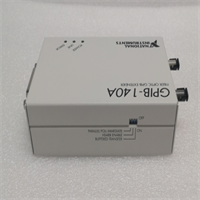
GPIB-140A 2 NI
Installation and Maintenance
Pre-installation preparation: Before installing the NI GPIB-140A/2, ensure the host computer is powered down and disconnected from AC power to prevent electrical damage. Verify that a compatible PCI slot is available and free of obstructions, and confirm that the system meets the minimum OS requirements for NI-488.2 driver installation. Inspect the GPIB cabling infrastructure and ensure all connected instruments are properly terminated, especially in daisy-chained configurations exceeding three devices. Gather necessary tools, including an anti-static wrist strap, screwdriver, and compatible shielded GPIB cables (e.g., NI SH32 series), to facilitate a smooth setup process. Confirm that instrument GPIB addresses are uniquely assigned and documented to avoid communication conflicts post-installation.
Maintenance recommendations: Regularly inspect the NI GPIB-140A/2 for dust accumulation, particularly around the card’s edge connector and ventilation areas, and clean using compressed air if necessary. Monitor system event logs and NI MAX diagnostics for any GPIB communication timeouts or bus errors, which may indicate failing cables or grounding issues. Periodically verify firmware and driver versions, updating to the latest NI-488.2 release to ensure compatibility and security. Avoid hot-plugging GPIB cables to prevent signal spikes; instead, power down instruments before making physical connections. Store spare NI GPIB-140A/2 cards in anti-static packaging in a dry, temperature-controlled environment to preserve component integrity over time.