
 Email: sales@slxytech.com
 WhatsApp / Wechat:8617062388866
 Phone:+86 17062388866
Description
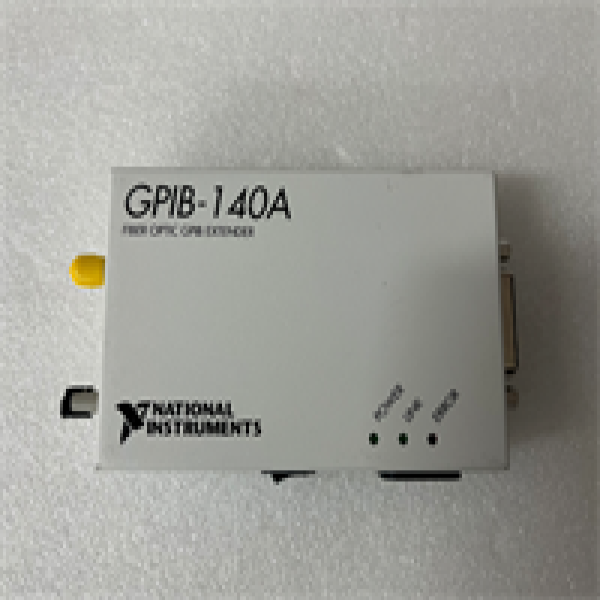
The NI GPIB-140A / 186135G-01 is a high-reliability PCI interface card developed by National Instruments (NI) for robust GPIB (General Purpose Interface Bus) communication in industrial automation, test and measurement, and data acquisition systems. Known by its primary model number NI GPIB-140A and internal part number 186135G-01, this device serves as a critical bridge between modern PC-based control systems and legacy IEEE 488-compatible instrumentation. As part of NI’s trusted family of GPIB interface solutions, the NI GPIB-140A / 186135G-01 delivers deterministic, low-latency performance essential for applications requiring precise timing and high data integrity. It supports integration with a wide range of test equipment such as oscilloscopes, digital multimeters, power supplies, and programmable logic controllers, making it ideal for automated test environments in R&D, manufacturing, and calibration labs.
Engineered for compatibility and durability, the NI GPIB-140A / 186135G-01 operates on the standard 32-bit PCI bus, supporting both 3.3V and 5V signaling to ensure broad compatibility across industrial PCs and embedded systems. The card is optimized for use with NI’s industry-leading NI-488.2 driver software, enabling seamless integration with LabVIEW, LabWindows/CVI, Measurement & Automation Explorer (MAX), and other NI development environments. This ensures engineers can rapidly deploy and scale complex test systems with minimal configuration overhead. Designed for continuous operation in demanding environments, the NI GPIB-140A / 186135G-01 provides reliable, high-speed communication with advanced error handling, bus arbitration, and support for up to 14 devices on a single GPIB bus, solidifying its role as a dependable backbone in mixed-vendor automation infrastructures.
GPIB-140A 186135G-01 NI
Technical Specifications
| Product Model | NI GPIB-140A / 186135G-01 |
| Manufacturer | National Instruments (NI) |
| Product Type | GPIB Interface Card |
| Bus Interface | PCI 2.2 compliant (32-bit, 5V or 3.3V) |
| GPIB Standard | IEEE 488.1, IEEE 488.2, SCPI compliant |
| Data Transfer Rate | Up to 8 MB/s (theoretical peak) |
| Typical Throughput | 1–2 MB/s (system-dependent) |
| Address Range | 0–30 (software-configurable) |
| Operating Temperature | 0°C to 55°C |
| Storage Temperature | –20°C to 70°C |
| Relative Humidity | 10% to 90% non-condensing (non-corrosive) |
| Installation | Internal PCI slot (full-length card) |
| Driver Support | NI-488.2, NI-VISA (Windows, Linux) |
Main Features and Advantages
High-Performance Native PCI Architecture: The NI GPIB-140A / 186135G-01 leverages the native PCI bus to deliver direct memory access (DMA) and low-latency communication, eliminating the protocol translation delays associated with USB-to-GPIB adapters. This results in faster data transfer, improved system responsiveness, and deterministic timing—critical for time-sensitive applications like production line testing and aerospace validation.
Seamless Software Integration: Fully supported by the NI-488.2 API and NI-VISA (Virtual Instrument Software Architecture), the NI GPIB-140A / 186135G-01 ensures compatibility with LabVIEW, C/C++, Python, .NET, and MATLAB. This enables rapid development of custom test sequences and easy integration into existing automation frameworks, reducing engineering time and deployment costs.
Industrial-Grade Reliability: Built with EMI shielding and robust circuit protection, the NI GPIB-140A / 186135G-01 maintains signal integrity in electrically noisy environments such as factory floors and power plants. Its solid-state design and absence of moving parts contribute to a long service life and minimal maintenance requirements.
Legacy System Compatibility: The NI GPIB-140A / 186135G-01 allows organizations to extend the life of valuable, calibrated instrumentation by connecting older GPIB devices to modern control systems. This cost-effective modernization strategy preserves investment while improving system scalability and performance.
Application Field
The NI GPIB-140A / 186135G-01 is widely used in environments where precise, reliable communication with test and measurement equipment is essential. In semiconductor manufacturing, it enables automated wafer probing and parametric testing by coordinating source-measure units and parameter analyzers with host PCs. In aerospace and defense, the NI GPIB-140A / 186135G-01 is deployed in avionics test benches to synchronize signal generators, spectrum analyzers, and environmental simulators during functional verification of flight systems.
Automotive R&D facilities utilize the NI GPIB-140A / 186135G-01 to automate engine dynamometer testing, integrating emissions analyzers, torque sensors, and data loggers into a unified control platform. In pharmaceutical and biotechnology labs, it supports automated HPLC and mass spectrometry systems, reducing manual intervention and improving data consistency. Educational institutions use the NI GPIB-140A / 186135G-01 in teaching labs to introduce students to instrument control and data acquisition fundamentals. Power generation and utility companies employ it in calibration systems for protective relays and process sensors, ensuring regulatory compliance. By enabling reliable, high-speed communication across diverse instruments, the NI GPIB-140A / 186135G-01 serves as a versatile and mission-critical component in mixed-vendor, high-precision automation systems.
Related Products
NI PCIe-GPIB+ – Next-generation PCIe interface card offering higher bandwidth and compatibility with modern PCs lacking PCI slots
NI GPIB-USB-HS – High-speed USB-to-GPIB converter for portable and laptop-based test systems
NI PCI-GPIB – Earlier PCI GPIB interface; the NI GPIB-140A / 186135G-01 offers improved firmware and driver support
NI GPIB-232CV-A – Serial-to-GPIB converter for systems with limited internal expansion options
NI SH32-2 – 2-meter shielded GPIB cable for reliable, noise-resistant connections to the NI GPIB-140A / 186135G-01
NI-488.2 Driver Package – Essential software for configuring and programming the NI GPIB-140A / 186135G-01
NI Measurement & Automation Explorer (MAX) – Configuration tool for detecting, testing, and managing GPIB devices
NI LabVIEW Full Development System – Graphical programming environment optimized for integration with the NI GPIB-140A / 186135G-01
NI VISA Runtime – Enables cross-platform communication for systems using multiple interface types
NI GPIB Terminator Kit – Includes active and passive terminators to ensure signal integrity on long GPIB buses
GPIB-140A 186135G-01 NI
Installation and Maintenance
Pre-installation preparation: Before installing the NI GPIB-140A / 186135G-01, ensure the host computer is powered down and disconnected from AC power to prevent electrical damage. Verify that a compatible 32-bit PCI slot is available and free of obstructions, and confirm that the system meets the minimum operating system requirements for NI-488.2 driver installation. Inspect the GPIB cabling infrastructure and ensure all connected instruments are properly terminated, especially in configurations with more than three devices. Gather necessary tools, including an anti-static wrist strap, screwdriver, and compatible shielded GPIB cables (e.g., NI SH32 series), to facilitate a smooth setup process. Confirm that each instrument on the GPIB bus has a unique address to avoid communication conflicts after the NI GPIB-140A / 186135G-01 is installed.
Maintenance recommendations: Regularly inspect the NI GPIB-140A / 186135G-01 for dust accumulation, particularly around the card’s edge connector and ventilation areas, and clean using compressed air if necessary. Monitor system event logs and NI MAX diagnostics for any GPIB communication timeouts or bus errors, which may indicate failing cables or grounding issues. Periodically verify firmware and driver versions, updating to the latest NI-488.2 release to ensure compatibility and security. Avoid hot-plugging GPIB cables to prevent signal spikes; instead, power down instruments before making physical connections. Store spare NI GPIB-140A / 186135G-01 cards in anti-static packaging in a dry, temperature-controlled environment to preserve component integrity over time.